Massey de Sale

Cheshire, 1613 and Vale-Royal.
Argent, a chevron Sable, between three lozenges Sable.
Escudo de plata, un cabrio de sable, acompañado de tres losanges de sable, dos y uno.
Coat of arms interpreted as follows: the base of the personal shield is rounded; the field is illuminated in Argent; the chevron is illuminated in Sable; the 3 lozenges are enamelled in plain Sable and outlined in the same colour; and the whole has a leather finish.
It appears in [Goldstraw, M. S. J.; 2013b] blazoned as «Argent, a chevron between three lozenges Sable».
Blazon keywords: Without divisions, Argent, Sable, Chevron, Between, Lozenge and Ordered.
Style keywords: Rounded, Illuminated, Outlined in sable and Leather.
Classification: Interpreted, Personal and Cheshire County.
Bearer: Massey de Sale.

Massy de Tatton

Cheshire, 1533-1580.
Quarterly: 1 and 4 Gules, three escallops Argent; 2 and 3 Or.
Escudo cuartelado: 1o y 4o de gules, tres veneras de plata; 2o y 3o de oro.
Coat of arms interpreted with: a rounded base; the field illuminated in Gules and Or; the escallops, that is the scallop shells of the pilgrim, outlined in Sable and illuminated in Argent; and the whole in leather.
[Goldstraw, M. S. J.; 2013a] blazons it as follows: «Quarterly, Gules and Or, in 1 and 4 three escallops Argent».
Blazon keywords: Quarterly, Gules, Or, Argent, Escallop and Ordered.
Style keywords: Rounded, Illuminated, Outlined in sable and Leather.
Classification: Interpreted, Personal and Cheshire County.
Bearer: Massy de Tatton.
Meoles de Meoles

Cheshire, 1613.
Argent, a bend Sable, between two lions' heads ereased Sable, langued Gules.
Escudo de plata, una banda de sable, acompañada de dos cabezas de león de sable, lampasadas de gules.
Coat of arms interpreted with: a rounded base; the field and the bend illuminated in Argent and Sable; the charges in plain Sable and Gules tinctures, outlined in Sable; and the whole in leather.
[Goldstraw, M. S. J.; 2013b] blazons it as «Argent, a bend between two lions' heads ereased Sable», this being the first coat of arms I interpreted from the County of Cheshire.
Use of the plural with the Saxon genitive
While in Castilian one uses the plural for the heads and the singular for the lion, that is, one writes «dos cabezas de león», in English one uses the plural for both the heads and the lions, that is, one writes «two lions' heads» and, therefore, the «s» of the Saxon genitive is omitted and only the apostrophe is written. This usage is general, for example:
- «there boars' heads» ~ «tres cabezas de jabalí»,
- «a pair of eagles' wings» ~ «dos medios vuelos»,
- «two ravens' wings» ~ «dos alas de cuervo»,
- «three hinds' heads» ~ «tres cabezas de cierva»,
- «four tritons' trumpet» ~ «cuatro trompetas de tritón»,
- «three wolfs' claws» ~ «tres garras de lobo»,
- «two greyhounds' heads» ~ «dos cabezas de galgo»,
- «two bears' forepaws» ~ «dos patas delanteras de oso»,
- «four dragons' heads» ~ «cuatro cabezas de dragante»,
- «two roe deers' attires» ~ « dos cuernas de corzo»,
- «three spears' heads» ~ «tres puntas de lanza»,
- «two unicorns' heads» ~ «dos cabezas de unicornio»,
- «two rams' horns» ~ «dos cuernos de carnero» o
- «three leopards' faces» ~ «tres cabezas de leopardo».
Except in cases where the term is used in English as if it were an adjective, for example «two Catherine wheels» ~ «dos ruedas de Santa Catalina», which are the wheels used to martyr her, or «three wagon wheels» ~ «tres ruedas de carro».
Blazon keywords: Without divisions, Argent, Sable, Gules, Bend, Head and Lion.
Style keywords: Rounded, Illuminated, Outlined in sable and Leather.
Classification: Interpreted, Personal and Cheshire County.
Bearer: Meoles de Meoles.
Tatton de Wythenshawe

Cheshire, 1613.
Quarterly: 1 and 4 Argent, a crescent Sable; 2 and 3 Gules, a crescent Argent.
Cuartelado: 1 y 4 de plata, un creciente de sable; 2 y 3 de gules, un creciente de plata.
Coat of arms interpreted with: a rounded base for the personal shield; the field illuminated in Argent and Gules; the crescent moons, as charges, two in plain Sable, another two in plain Argent metal and, all four, outlined in Sable; and the whole in leather.
[Goldstraw, M. S. J.; 2013b] describes it with the following blazon: «Quarterly Argent and Gules, in the first and fourth a crescent Sable, in the second and third a crescent of the first.» and adds «Crest: A greyhound sejant Argent, collared and tied by a line Gules to an oak tree Proper fructed Or», a crest which I have not represented here.
Blazon keywords: Quarterly, Argent, Gules, Crescent and Sable.
Style keywords: Rounded, Illuminated, Outlined in sable and Leather.
Classification: Interpreted, Personal and Cheshire County.
Bearer: Tatton de Wythenshawe.
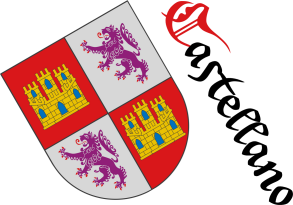
Tatton de Wythenshawe, crescents

Cheshire, 1613.
Quarterly: 1 and 4 Argent, a crescent Sable; 2 and 3 Gules, a crescent Argent.
Cuartelado: 1 y 4 de plata, un creciente de sable; 2 y 3 de gules, un creciente de plata.
Coat of arms interpreted with: a rounded base; the field illuminated in Argent and Gules; the 4 crescents, outlined in Sable, in plain Argent and Sable tinctures; and the whole in raised-stroke style.
Regarding the moon, [Avilés, J.; 1780a; página 306] tells us that «según el error popular figuran con cara humana algunos, se ve muy poco usada en las Armerías de España, y lo mismo en las de Francia; y porque se encuentra así en muchos Escudos de Alemanes.». On the crescent he adds that «es una figura en forma de Luna, llamada por esto de muchos así, ó por su diminución Luneta».
Blazon keywords: Quarterly, Argent, Gules, Crescent and Sable.
Style keywords: Rounded, Illuminated, Outlined in sable and Freehand.
Classification: Interpreted, Personal and Cheshire County.
Bearer: Tatton de Wythenshawe.
Vernon the Elder, Sir Raulfe

Cheshire, 1533-1580.
Or, on a fess Azure, three Garbs Or.
Escudo de oro, una faja de azur, cargada de tres gavillas de trigo de oro.
Coat of arms interpreted with: a rounded base; the field, fess and garbs outlined in Sable and illuminated in Or and Azure; and the shield in leather.
In [Goldstraw, M. S. J.; 2013b] for «Sir Raulfe de Vernon ye old». the following blazon is recorded: «Or, on a fesse Azure three garbs of the field».
Background on the bearer of this coat of arms:
- The first Vernon to arrive in England was William de Vernon, who came during the Norman Conquest and obtained lands in the county of Cheshire. He held them thanks to its first earl, known as Hugh d'Avranches.
- His son Richard de Vernon settled in Shipbrook, near Northwich, also in county of Cheshire and was the first Baron of Shipbrook.
- The barony passed down until Warine Vernon, 5th Baron of Shipbrook, had no male heirs and his vast lands were divided among his daughters and his brother Raplh de Hanwell.
- The son of Raplh de Hanwell was also named Ralph and lived so many years that he earned the nickname «The Old Liver». I understand that his arms are those presented in this article, which is titled Vernon the Elder, Sir Raulfe.
- He was succeeded by his son Sir Richard, the fruit of his 2nd marriage with Matilda Grosvenor of Kinderton, Cheshire, who was therefore the 7th Baron.
- His grandson, also named Sir Richard, fought at the Battle of Shrewsbury with the forces opposed to King Henry IV of England, was captured and executed for treason.
Blazon keywords: Without divisions, Or, Azure, Fess, Charged, Wheat, Garb and In fess.
Style keywords: Rounded, Illuminated, Outlined in sable and Leather.
Classification: Interpreted, Personal and Cheshire County.
Bearer: Vernon the Elder, Sir Raulfe.
Vernon, Sir Ralfe

Cheshire, 1533-1580.
Or, a bend Azure.
Escudo de oro, una banda de azur.
Coat of arms interpreted with: a rounded base; the field and the bend illuminated in Or and Azure and outlined in Sable; and the shield with a leather finish.
In [Goldstraw, M. S. J.; 2013b] for «Sir Ralfe Vernon». the following blazon is recorded: «Or, a bend Azure».
Blazon keywords: Without divisions, Or, Azure and Bend.
Style keywords: Rounded, Illuminated, Outlined in sable and Leather.
Classification: Interpreted, Personal and Cheshire County.
Bearer: Vernon, Sir Ralfe.
Vernon, Baron of Shubbroc

Cheshire, 1533-1580.
Or, a fess Azure.
Escudo de oro, una faja de azur.
Coat of arms with a basic interpretation based on: a rounded base; the field and its fess illuminated in Or and Azure and outlined in Sable; and the shield in leather.
In [Goldstraw, M. S. J.; 2013b] for «Vernon, baron of Shubbroc, bulgo Shipbroke» ~ Shipbrook, the following blazon is recorded: «Or, a fesse Azure».
Blazon keywords: Without divisions, Or, Azure and Fess.
Style keywords: Rounded, Illuminated, Outlined in sable and Leather.
Classification: Interpreted, Personal and Cheshire County.
Bearer: Vernon, Baron of Shubbroc.
Blazon equivalent to: Vidaurre de Navarra.
Continue with: Walkington of the County of Cheshire.
-
Language
-
Categories of heraldry
-
Divisions of the field
- Without divisions
- Party per pale
- Party per fess
- Party per bend
- Party per bend sinister
- Tierce
- Tierce sinister
- Tierced per pale
- Tierced per fess
- Tierced per bend
- Tierced pallwise inverted
- Quarterly
- Quarterly per saltire
- Gyronny
- Party per fess, the chief per pale
- Party per pale, the sinister per fess
- Party per fess, the base per pale
- Party per pale, the dexter per fess
- Chapé
- Chaussé
- Embrassé
- Contre-embrassé
- Chapé ployé
- Party per chevron
- Enté
- Enté en point
- Flanched
-
Metals
-
Colours
-
Furs
-
Other tinctures
-
Ordinaries and sub-ordinaries
-
Diminutives of the ordinaries
-
Geometric charges
-
Composite ordinaries
-
Inanimate charges from Nature
Atom, Cloud, Crescent, Decrescent, Diamond, Emerald, Estoile, Goutte, Increscent, Lightning flash, Moon, Mount, Mullet, Mullet of four points, Orbital, Plough of Ursa Major, Rainbow, Ray of the sun, River, Sea, Snowflake, Sun, Sun in splendour, Sun of May, Terrestrial globe, Trimount, Water and Wave.
-
Vegetal charges from Nature
Acorn, Apple, Apple tree, Ash, Bluebonnet, Bunch, Camellia, Chrysanthemum, Cinquefoil, Cornflower, Dogwood flower, Double rose, Easter lily, Eguzki-lore, Elm, Fleur de lis, Flower, Gourd, Grape, Holm oak, Hop cone, Indian paintbrush, Kapok tree, Laurel, Lily, Linden, Lotus flower, Madonna lily, Madrone tree, Mexican cedar tree, Mulberry tree, Oak, Olive tree, Palm tree, Plantain plant, Pomegranate, Poplar leaf, Prickly pear cactus, Rose, Scots pine, Shamrock, Sunflower, Thistle, Tree, Tulip, Vine and Wheat.
-
Animal charges from Nature
Badger, Bald eagle, Barbel, Barn owl, Bear, Beaver, Bee, Beetle, Bighorn sheep, Binson, Black grouse, Blackbird, Boar, Brach hound, Bull, Cat, Cow, Doe, Dog, Dolphin, Dove, Eagle, Elephant, Falcon, Female figure, Fish, Flame, Fly, Fox, Frog, Gazelle, Goat, Goldfinch, Goose, Heron, Horse, Hummingbird, Jaguar, Lark, Leopard, Lion, Lion passant, Lion rampant guardant, Lioness, Lynx, Male figure, Martlet, Merino ram, Monkey, Mountain bluebird, Owl, Panther, Parrot, Peacock, Pelican, Pelican in her piety, Pronghorn, Puffin, Quetzal, Raven, Roe deer, Rooster, Salamander, Savage, Seagull, Serpent, She-wolf, Stag, Starling, Swan, Talbot, Turtle, Tyger, Vulture, Warren hound and Wolf.
-
Parts of natural charges
Arm, Beak, Branch, Caboshed, Chest, Claw, Covert, Dorsal fin, Eagle claw, Ear of wheat, Ermine spot, Escallop, Feather, Foot (palmiped), Footprint, Foreleg, Forepaw, Hand, Head, Heart, Hoof, Leaf, Neck, Ostrich feather, Palm frond, Paw, Roe deer' attire, Shoulder, Sprig, Stag's attire, Stag's massacre, Stem, Swallow-tail, Tail, Tail addorsed, Tail fin, Talon, Tibia, Tooth, Trunk, Trunk (elephant), Two hands clasped, Two wings in vol, Udder, Wing and Wrist.
-
Artificial charges
Ace of spades, Adze, Anchor, Anvil, Arch, Archer, Arm vambraced, Armillary sphere, Arrow, Axe, Baton of Herald, Bell, Bell tower, Beret, Bonfire, Book, Bookmark, Bow, Branding iron, Bridge, Broken, Buckle, Cannon, Cannon dismounted, Cannon port, Canopy roof, Caravel, Carbuncle, Castle, Cauldron, Celtic Trinity knot, Celtic trefoil knot, Censer, Chain, Chess rooks, Chi-Rho symbol, Church, Clarion, Clay pot, Closed book, Club, Column, Comb, Comedy mask, Compass rose, Conductor's baton, Cord, Covered cup, Crossbow, Crossed staff, Crozier, Crucible, Cuffed, Cup, Cutlass, Cyclamor, Dagger, Displayed scroll, Double vajra, Drum, Ecclesiastical cap, Fanon, Federschwert, Flagpole, Fleam, Four crescents joined millsailwise, Full plate armor, Galician granary, Garb, Gauntlet, Geometric solid, Grenade, Halberd, Hammer, Harp, Host, Hourglass, Incense burner, Key, Key ward, Knight, Knot, Lantern, Letter, Line, Loincloth, Maunch, Menorah, Metal mortar, Millrind, Millstone, Millwheel, Minaret, Monstrance, Mortar, Mullet of six points pierced, Nail, Non-classic artifact, Norman ship, Number, Oar, Oil lamp, Open book, Page, Paintbrush, Pair of pliers, Pair of scales, Pestle, Piano, Pilgrim's staff, Plough share, Polish winged hussar, Port, Portcullis, Potent, Quill, Ribbon, Rolled scroll, Rosette of acanthus leaves, Sabre, Sackbut, Sail, Scepter, Scroll, Scythe, Sheaf of tobacco, Ship, Skirt, Spear, Spear's head, Stairway, Star of David, Step, Sword, Symbol, Tetrahedron, Torch, Tower, Tragedy mask, Trident, Trumpet, Turret, Two-handed sword, Two-man cross-cut saw, Wagon-wheel, Wall between two towers, Wall couped, Water-bouget, Wheel, Winnowing fan and With a turret.
-
Immaterial charges
Angel, Archangel, Basilisk, Dragon, Dragon's head, Garuda, Golden fleece, Griffin, Heart enflamed, Justice, Mermaid, Our Lady of Mercy, Ouroboros, Paschal lamb, Pegasus, Phoenix, Sacred Heart of Jesus, Saint George, Sea-griffin, Sea-lion, Trinity, Triton, Unicorn, Winged hand and Wyvern.
-
External elements
-
Heraldic creations
-
References
-
Formats
-
Keywords on this page
Between, Azure, Bend, Head, Chevron, Charged, Cheshire County, Crescent, Quarterly, Outlined in sable, In fess, Fess, Garb, Personal, Gules, Illuminated, Interpreted, Lion, Lozenge, Martlet, Massey de Sale, Massy de Tatton, Meoles de Meoles, Ordered, Or, Leather, Argent, Without divisions, Rounded, Sable, Tatton de Wythenshawe, Freehand, Wheat, Escallop, Vernon the Elder, Sir Raulfe, Vernon, Baron of Shubbroc, Vernon, Sir Ralfe and Walkington of the County of Cheshire.